The Top 5 Private Clubs in Singapore
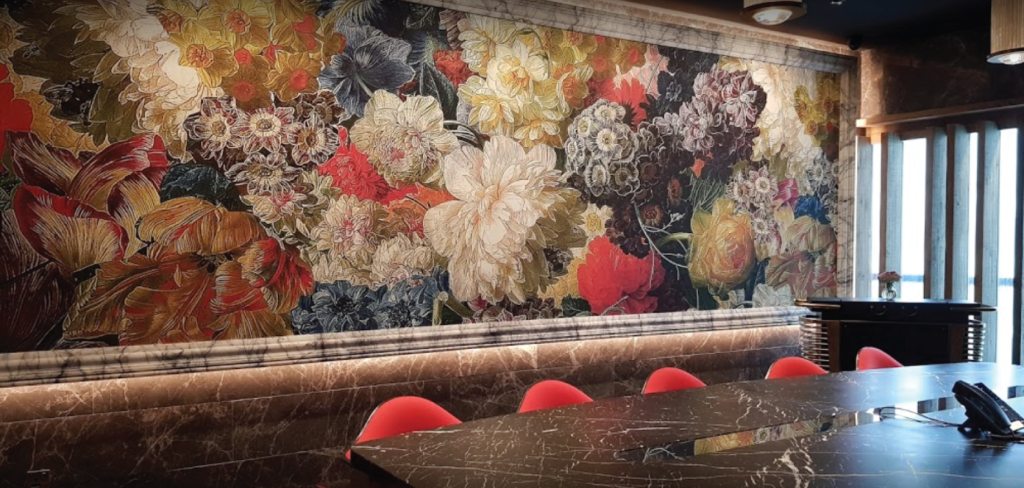
In Singapore, movers and shaker like to see and be seen at the city’s private clubs. Designed to promote business and pleasure among the elite, the stylish clubs all offer luxurious private venues from which members can enjoy a number of exclusive facilities, high society networking and special functions. Straits Clan One of the newest clubs in town, Straits Clan boasts four storeys of food and dining, entertainment, fitness and workspace venues geared toward Singapore’s creative and professionals. The stylish space offers pure class with a dash of fun. Tower Club Available to join by invite only, the Tower Club has been around for more than two decades and is known to be where Singapore’s leading business elite choose to mingle. Located in the penthouse of the Republic Plaza Tower, the club features three dining venues, a fitness centre and meeting rooms while organising exclusive functions and events throughout the year. 1880s The 1880s club is meant as a place to spark conversation amongst its influential members and boasts a restaurant, bar, co-working space, spa and more. Madison Rooms Created to “work, play, connect” (the club’s motto), Madison Rooms offers a contemporary blend of traditional country club mixed with modern restaurant and bar. Quiet meeting rooms can be found along with a chic bar and cigar lounge to enjoy once work wraps up. One°15 Marina Situated at Sentosa Cove, the sophisticated One°15 Marina features all you would expect from an exclusive club plus marina facilities from which to moor your yacht or charter a cruise to nearby islands.
The Top 5 Must-Try Dishes in Laos
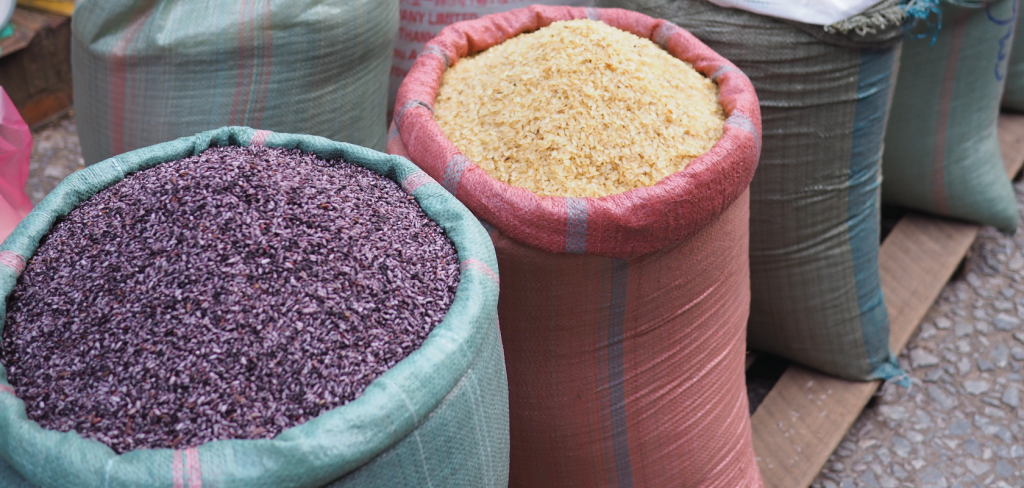
Packed with fragrant herbs, fresh veggies and sizzling spice, Lao cuisine offers a burst of flavours and textures designed to excite the palate. While travelling through the country, make sure to try these delicious dishes. Kaipen with Jaew Bong Popular for snacking, kaipen are sundried sheets of freshwater green algae garnished with sesame seeds that are then flash-friend and eaten with a flavourful chilli paste known as jaew bong. Larb Considered Laos’ national and most famous dish, larb is a minced meat ‘salad’ that be made with chicken, beef, duck, fish, pork or even tofu. The minced meat is mixed with plenty of fresh herbs, like basil or mint, and chilis along with fish sauce, shrimp paste, sugar and lime juice. Larb pairs perfectly with pinches of sticky rice…just make sure to ask for it without the chilies if you don’t want it too spicy! Naem Khao Tod Naem Khao Tod, or crispy rice salad, is a unique salad made with deep-fried balls of rice mixed with fermented pork sausage (naem), grated coconut, peanuts, chilis, fish sauce and fresh herbs. The result is a flavourful mouthful that is traditionally eaten in a lettuce leaf as an appetiser. Mok Pla Mok Pla is fish that is steamed with aromatics and sauces like lemongrass, kaffir leaves, and fish sauce in a banana leaf. Like larb, mok pla is also eaten with one’s fingers and a side of sticky rice. Lao Beer Okay, so this isn’t a dish, but it’s still a must-try while in Laos! Light and refreshing, especially when served the Laotian way in a small glass with ice, Lao Beer helps wash down the country’s delicious dishes (and help you handle the spice!). Coming in light and dark varieties, the brand is often considered one of the best beers in Southeast Asia. Cheers!
The Top 5 Natural Attractions in China
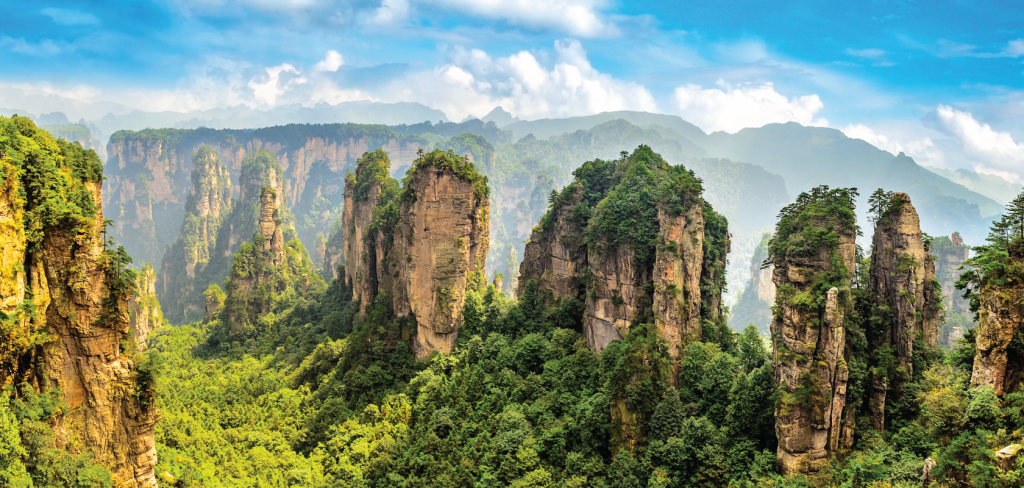
Whichever direction you head in China, you won’t be far from the incredible natural scenery. North, south, east and west, China amazes travellers at every turn with dramatic mountains, tranquil valleys, lush forests, cascading waterfalls and more. While you can’t go wrong in choosing where to explore first, the five regions below boast some of the country’s most iconic natural settings. Mountains and Rivers in Guilin Known for its karst formations, Guilin has long held been a go-to destination for striking natural beauty and unbelievable mountains. Listed as World Natural Heritage site in 2014, the region offers some of the world’s most stunning karst formations and caves, like the famous Reed Flute Cave, together with idyllic scenery along the Li River. While in Guilin, make sure to take a leisurely boat ride down the river to be fully surrounded by the marvellous peaks and picturesque reflections. Situated in the Northeast Guangxi Zhuang Autonomous Region, the best time to visit is April to October. Jiuzhaigou Natural Reserve in Sichuan Another UNESCO World Natural Heritage site, Jiuzhaigou National Nature Reserve is a National Geopark and the first nature preserve in China. Located at an elevation of around 3,000 metres, the Jiuzhaigou Valley boasts hundreds of incredible lakes, waterfalls, rivers and springs, and is also home to a wide variety of rare plants, animals (including Giant Pandas), and even ancient fossils and glaciers. Highlights include Five Flower Lake, with different colours ranging from light yellow to deep blue, Changhaizi Lake and the emerald-coloured Rhinoceros Lake. The best time to visit this reserve, which is located in Sichuan Province is in the autumn from October to November. Huangshan Mountain Perhaps the most iconic mountain in China, Huangshan Mountain, also known as Yellow Mountain, draws in visitors with its stunning sunsets and mountaintop scenery. The view of a ‘sea of clouds’ from the mountain’s peak is particularly picturesque but photographers enjoy capturing the area’s unique pine trees and hot springs as well. The UNESCO World Heritage site is one of the country’s leading tourist destinations and best visited from November to May. Zhangjiajie National Forest Park In the spring (March to May) and autumn (September to November), visitors flock to Zhangjiajie National Forest Park in Hunan Province. Sprawling across 1,840 hectares, the park is best known for providing the inspiration for James Cameron’s Avatar as well as many Chinese films and television shows. The paradisiacal park is home to thousands of unique geological structures, peaks and caves, and encompasses Yangjiajie, Tianzi Mountain and Suoxiyu Nature Reserve. Yangtze River A cradle of Chinese culture, the Three Gorges of Yangtze River – Qutang Gorge, Wuxia Gorge and Xiling Gorge – in Sichuan and Hubei Provinces – not only a cultural symbol of Chongqing but China itself. In fact, Qutang Gorge is imprinted on the back of the 10 RMB note. Thanks to the Three Gorge Dam, a Yangtze River cruise through the different gorges is a highly popular and picturesque way to experience the region. The best time to visit is from April– December.
The Top 5 Crazy Rich Asians Set Locations in Malaysia
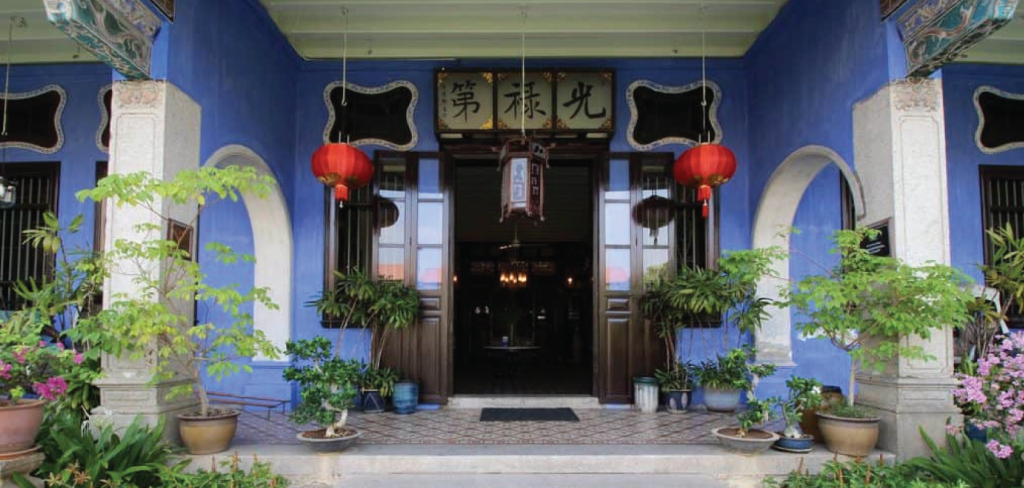
One of the hottest films of the year, Crazy Rich Asians has been a hit with audiences across Asia and beyond. Set in stunning Singapore, it has created a new interest in the Lion City with audiences captivated by the modern and heritage set locations featured in the story about heroine Rachel and her crazy-rich boyfriend, Nick. Some of the film’s most iconic scenes were actually filmed in neighbouring Malaysia, however. If you want to live it up like the characters in the movie, here’s your guide to hanging out in Malaysia like a crazy-rich Asian. Carcosa Seri Negara The ancestral home of the fictional Young family, this heritage mansion was falling into disrepair before the producers of the mega-hit came along and fell in love with the building’s colonial elegance and sprawling estate. The twin buildings of Carcosa Seri Negara actually have a starring role in Malaysia’s journey to independence. Once the home of Frank Swettenham, Malaya’s first British resident, the estate was transformed into a luxury hotel popular with wealthy socialites and frequented by the likes of Queen Elizabeth II. Located near the Perdana Botanical Gardens of Kuala Lumpur, the property is now being transformed yet again into the Asian Heritage Museum. “Jalan Merdeka,” an exhibit chronicling the nation’s journey to independence, is currently on display, and the museum will soon house a collection of artefacts from China, the Malay Archipelago and beyond, including untold treasures salvaged from ships sunk off the region’s storied coasts. Cheong Fatt Tze Mansion One of Crazy Rich Asian’s most iconic scenes features a mahjong showdown between Rachel and her fiance’s mother, Eleanor. A homage to Joy Luck Club, the last Hollywood film to feature an all-Asian cast, the scene plays out in the stunning courtyard of a heritage Chinese mansion. The building features feng shui elements, countless antique treasures, imported Scottish cast iron columns, English art-nouveau stained glass windows, and Stoke-on-Trent floor tiles, the opulent vision of historic wealthy Penang merchant, Cheong Fatt Tze. Also known as the Blue Mansion, Cheong Fatt Tze Mansion has received numerous conservation rewards following its restoration in the early 2000s. It is now one of the crowning jewels in the UNESCO World Heritage site of George Town, a living museum and boutique hotel steps away from Penang’s best street food and cultural sites. Langkawi Island The “Rawa Island” featured at the conclusion of the rowdy bachelor party scene is, in reality, stunning Langkawi, a cluster of 99 picturesque islands with white-sand beaches and majestic geological formations dotted between azure waters. The first UNESCO Global Geopark in Southeast Asia, the stunning landscape features karsts, sea caves, arches, stacks and other breath-taking natural formations. These half a billion-year-old rocky structures are topped with lush rainforests, making them a magical paradise in the tropical seas. Four Seasons Resort Langkawi Also in Langkawi was the bachelorette party, filmed at the uber-luxe Four Seasons Resort Langkawi. You too can enjoy the stunning seaside escape and indulgent pampering seen on the big screen. Tucked away within the Langkawi UNESCO Global Geopark, the resort offers the finest of spa escapes in addition to the splendour of Mother Nature at your door. Stay in one of the Malay-style pavilions and villas perfect for a peaceful and romantic getaway or bring the whole family for a fully-catered experience. Lounge in bliss by the pool or along the 1.5-kilometre stretch of powder white sand beach. Astor Bar, St. Regis Kuala Lumpur Converted into an exclusive jewellery boutique, the setting where fashion icon Astrid falls in love with a decadent pair of pearl drop earrings is actually the Astor Bar of St. Regis Kuala Lumpur. Combining old-world charm with modern black-and-gold, marble and brass features, it didn’t take much to reimagine this upscale watering hole as a bespoke jeweller shop stocked with a fortune’s worth of gems. To honour the film, The Astor Bar now serves a signature cocktail, “The Astrid”, for a limited time alongside its usual Champagne, spirits and fine vintage wines. The bar also offers a choice collection of cigars and high-class nibbles such as royal king crab, truffle cream and Oscietra caviar. Served in a sumptuous atmosphere underneath a domed ceiling gilded in handmade Italian gold tiles, this location truly defines the crazy-rich opulence of the film. If you’re looking to recreate the hit film’s Asian adventure, be sure to include stops at these gorgeous Malaysian destinations. From cosmopolitan Kuala Lumpur to historical Penang, to idyllic Langkawi, you don’t have to be as wealthy as the Young family to have your own crazy-rich experience.
The Top 5 Most Bizarre Things to Do in Bangkok
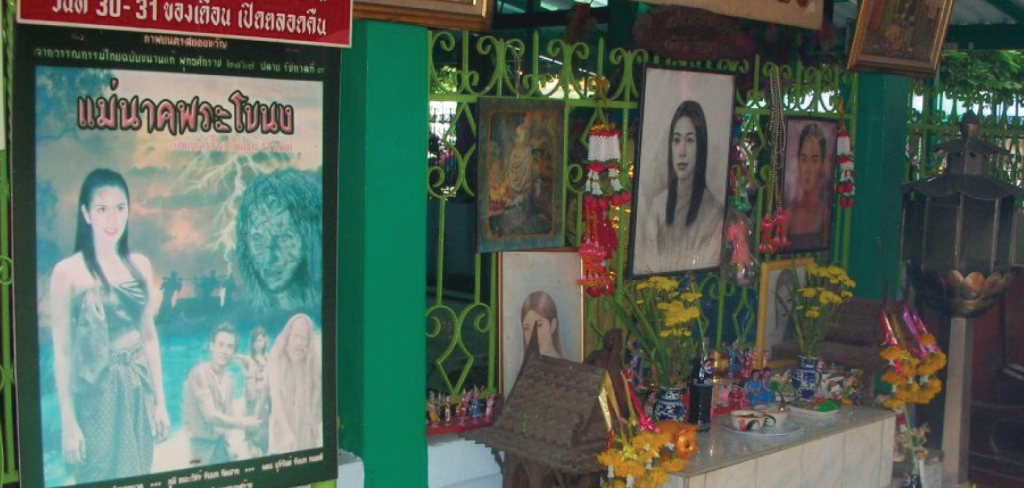
While global travellers may be familiar with Bangkok’s iconic sites, such as the glittering Grand Palace, sprawling street food stalls or impressive Reclining Buddha at Wat Pho, Thailand’s capital city also offers an array of weird and wonderful places and activities geared toward visitors with more unconventional interests. Pay Homage at the Mae Nak Shrine In one of Thailand’s most well-known legends, a young woman named Nak died during childbirth while her husband, Mak, was away at war. Upon returning home to his village, however, the husband found his wife and child waiting for him. Everything was fine until strange things started happening and Mak realised his wife was actually a ghost. After seeing the truth, Nak went on a rampage throughout the village of Phra Khanong…near Ekkamai and Thonglor in modern-day Bangkok! Today, situated near a canal, a hidden but popular shrine to Nak’s ghost and infant is home to several statues, paintings and plenty of offerings dedicated to Mae Nak. Find Bread That Looks Like Body Parts A couple hours outside of Bangkok, those who step into Eat Bakery may find a gruesome surprise. Severed human body parts, complete with blood and bruising, are available for sale. But don’t worry, the gruesome body parts are actually just bread. Created by artist and baker, Kittiwat Unarrom, the bread is made from your standard dough plus raisins, chocolate and cashews, and then painted to resemble gory severed limbs. See Bones, Blood and More in at Siriraj Medical Museum Housed in Thailand’s oldest hospital and medical school, the Siriraj Medical Museum is a must-see stop for anyone who’s fascinated with medical curiosities, forensics and the macabre. Onsite, six different museums covering Thai medicine, pathology, anatomy, forensics parasitology, and prehistoric artefacts showcase a range of bizarre exhibitions, objects and medical marvels from the mummified remains of a famous Thai serial killer to parasitic worms. Just be warned – it’s best to go on an empty stomach! Visit the Bangkok Airplane Graveyard Just off of Bangkok’s Ramkhamhaeng Road, an abandoned 747, two smaller planes and more lie in an empty lot. While seeing cast-off planes can come as a surprise, what’s even more shocking is that a few local families now call the plane carcasses home. Curious visitors who find their way to the lot can even sneak a peek inside if the families are willing for a small donation. Get Some Sexy Som Tam The Tum Tard Arb Sub stall at Chatuchak Market serves more than tasty som tam, or green papaya salad – patrons also get a side of eye candy with their meal! Here a wait team of Thai models flaunting perfectly chiselled abs and bulging biceps (barely) dressed in elaborate Thai garb serve spicy plates of different som tam as fast as the owner Charoen “Tony” Phochaisee can churn them out.
The Top 5 Beaches in Vietnam
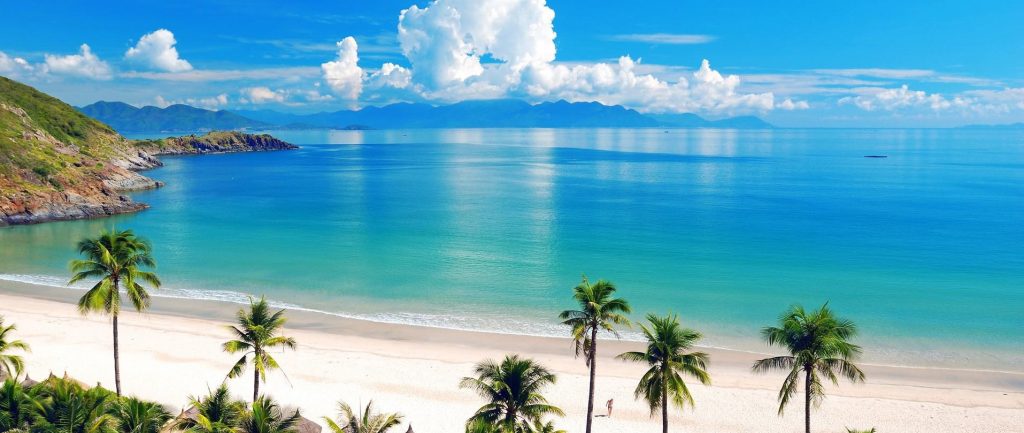
The Top 5 Beaches in Vietnam With a long coast stretching from north to south next to the East Sea, Vietnam is home to a bevy of beautiful beaches just waiting to be explored. For days spent basking on sunbaked strands and evenings taking in the sunset, these are some of our favorite beaches in Vietnam. Danang and Hoi An With a pristine coral reef, palm-fringed shoreline, and some top-notch beach resorts, Danang beach is definitely one of the most well-liked beaches not only in Vietnam but the entire world. There are several sections of the beach, some of which are My An, My Khe, Cua Dai and Non Nuoc, of which My An, My Khe, and Non Nuoc are collectively known as ‘beaches of Danang’. Early morning or late afternoon are the best times to join or observe crowds of cheerful Vietnamese exercising and swimming in the soft sunlight at My Khe beach. Hoi An’s new go-to beach, An Bang beach is located 30 km from Danang. An Bang beach is lined with perfectly manicured gardens, lively bars and restaurants, and plenty of accommodation facilities. An Bang gives visitors the chance to indulge themselves in the simple fishing life, where children gather every sunset to play with kites or just collect shells while they wait for their parents to return from the sea. When to go: The best time to visit Danang is from February to May, when the skies are sunnier and humidity levels lower. During the months from June to August, the weather can be hot but you can always take a dip in the cool refreshing pool or simply grab a lounger spread out. An Bang beach is suitable to visit year round as wet season, from September to March, means cooler conditions but six-foot waves that are perfect for surfers. Whereas, dry season – between March and September – is better for lounging around with a cocktail. Things to do: Danang is one of the best place for surfing, scuba diving, sunbathing, and swimming. Some said that the best time to catch the beach is at sunrise or when the fishermen are setting out to sea. An Bang beach is perfect for sunbathing and sipping cocktails with the occasional swim in the turquoise waters to cool off. If “eat, sleep, swim, repeat” does not sound like your ideal getaway, book a full day of sun and surf or board the ferry to the Cham Islands, where you’ll have pristine shores and a handful of diving spots all to yourself. Where to stay? Nha Trang Nha Trang, a beach city in the South Central Coast of Vietnam is known for its spectacular turquoise-colored waters with a wide array of dining and accommodation options set along the 6-kilometer-long sandy beaches. Nha Trang beaches are offering a myriad of sightseeing and recreational activities for visitors looking to soak up the sun during their holiday. The bustling Tran Phu Beach is for travelers who want to be in the center of all the action while Bai Dai Beach is a quieter one only a 30-minute drive from the center of Nha Trang. Unlike other beaches which are often sloped, Bai Dai topography is planar and covered with a kilometer of soft sand that is great for escaping the often overcrowded city. When to go: The long dry season filled with sunshine runs from January to August and the least humidity is between February and April. At this time of year, the weather is simply perfect and your visit to Nha Trang will be very enjoyable. Things to do: Nha Trang is a playground for sun seekers. You can spend the days dining on delicious seafood, snorkeling around stunning islands, and partying on the sand after dark. Nha Trang has some of the country’s finest luxury resorts and thrilling water sports. Daylong island excursions will show you around Nha Trang Bay, and a series of small islands nearby as well as colourful fishing villages and riverside restaurants are for you to explore further Where to stay? Mui Ne, Phan Thiet 200 kilometres north of Ho Chi Minh City lies the fishing village of Mui Ne. Being the tourism center of Phan Thiet city, Mui Ne is famous for immense sand dunes, fabulous beaches, rows of shading coconut trees and sunshine all year round. Vast, white-sand dunes nearby – which include lakes and swamps in the midst of the terrain – make for a captivating backdrop to hot-air balloon rides, too. This place is also the most well-known destination for the surfing Asia. Tourists coming here will be stunned by the pristine beauty of nature and attracted by special cuisine and the local rustic life of fishing villages. When to go: The best time to enjoy Mui Ne beach’s activities are between the months of November and March, when skies are sunny with strong winds, resulting in optimum temperatures and wave conditions. Things to do: Mui Ne is heaven for adrenaline and adventure lovers. It has everything from kite surfing and wake boarding, paddle boarding to sand boarding and quad biking. Thanks to its rock-free waters, Mui Ne Beach is ideal for a day of swimming and kayaking, too. Where to stay? Phu Quoc Phu Quoc Island, located at the southern tip of Vietnam, has some absolutely stunning beaches. The main drag, known as Long Beach, is relaxed and offers easy public access to the water. The beach stretches for around 20 kilometers and the ocean along Long Beach is crystal clear, calm and warm with resorts, restaurants, and hotels encroaching on much of it. Toward the island’s southern coast, Bai Sao is famous for its stunning scenery and comes with the added adventure of navigating Phu Quoc’s dirt roads. Further north, you’ll find more secluded shores, from Ong Lang beach to the long, empty stretch of Bai Dai with white powdery sand and palm trees. When to go: The best months to visit Phu Quoc are from December until April. The rains don’t start coming down hard until June, but April and May are hot. Things to do: Days here are spent on the sand, while nights are for
A Day in the Life: A Senior Guide in Malaysia’s Wilderness
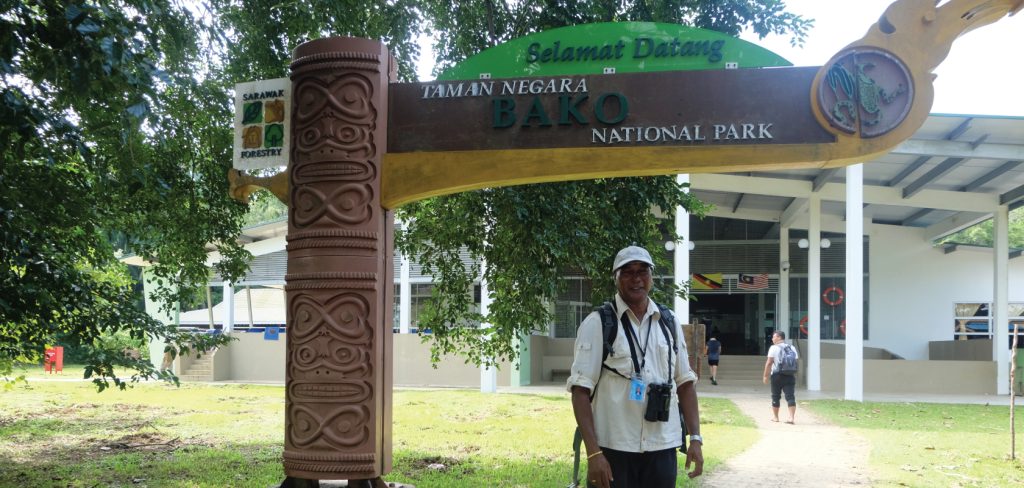
Knowing Selvum P. Nagalingam, who is better known as Selvum to his friends and clients, has been working with Diethelm Travel Malaysia for 15 years but his expertise goes even further back when we first trianed as a guide in 1988. Here he shares what it’s like to be a senior guide touring the wildly beautiful forests, national parks and hiking trails in Malaysia – from what he does to prepare before trek and which routes he finds most interesting. Can you tell us about working with Diethelm Travel Malaysia? Working with Diethelm Travel Malaysia has been very interesting. I regularly experience new adventures as a tour guide. As a senior guide, I‘ve been given the opportunity to lead our guides’ department and scouting trips in search of new tour products. I’m very happy working with my colleagues at Diethelm Travel Malaysia, too. Which field are you most interested in as a guide? I love the cultural tours such as the overnight visits to native villages and longhouses. Discovering the local cultures and customs in Sarawak is an endless learning experience because I find out something new every visit. Plus, the friendliness of the natives in these remote villages is simply the best. Why did you want to become a travel guide? I had never dreamed of becoming a travel guide when I was younger. However, one of my closest friends was a tour guide, and when I accompanied him to a remote native longhouse, I was completely captivated. I thought that guiding would be the best way for me to showcase my country, its fascinating people and culture to the outside world. What interests you most about Malaysia Borneo National Parks? There are so many things about Malaysia Borneo National Parks that interest me. However, I am most interested in its dense rainforest and diverse flora and fauna. What do you prepare when taking a guest into the forest? To prepare myself for a forest trek, I am always cautious and equip myself with a proper first-aid kit, raincoat, trekking shoes, lightweight clothing, pocket knife and sun hat. I make sure to recommend a packing list to my clients, too. To keep my clients safe and prepared for their upcoming trip, I also tell them what they can expect to see and experience in the forest, the dos and don’ts whilst in the forest, and how to be respectful to the surrounding nature during their tour. Where is your favourite off-the-beaten-track place in Malaysia? The remote Batang Ai Wild Orang Utan Forest is my favourite place so far because of the dense rainforest and the beautiful orangutans. I also love the crystal clear mountain streams and cascading waterfalls, although they are a challenge to hike to and see. What route around Malaysia is your personal favourite? Going to Lemanak River or Batang Ai Lake because I enjoy staying with the local ethnic groups. In fact, I consider longhouses to be my second home. What route around Bako National Park is your personal favourite? Out of the many trails in Bako, my favourite routes are the Paku Trail, Ulu Assam Trail and Lintang Trail. There are many opportunities along these trials to see a wide variety of wildlife vegetation, which always astonishes visitors. Which national park is your favourite and why? Since it is nearest to the city and has many varieties of vegetation in one small area, Bako National Park is my all-time favourite. What kind of basic knowledge must you have for taking guests into the national parks or trekking? First and foremost, one must know the forest area very well. Besides that, one must have at least a basic knowledge of flora and fauna, rules for visiting a national park, and the knowledge of basic first aid and jungle safety precautions. Have you ever encountered wild animals up close? In my many years of experience, I’ve encountered wild animals countless times. However, the most interesting animals are the wild orangutans in the Batang Ai primary jungle. Their fur and behaviour are totally different from the captive orangutans. What are the tourist activities your guests are most interested in and where do they like to visit? Tourists are more interested in hands-on activities nowadays, so experiences like visiting native longhouse villages and participating in cycling tours, which provide profound cultural experiences but also a dash of adventure, really interest them. ### Want to trek with him? Just let us know here.
Borneo’s Traditional Tribes
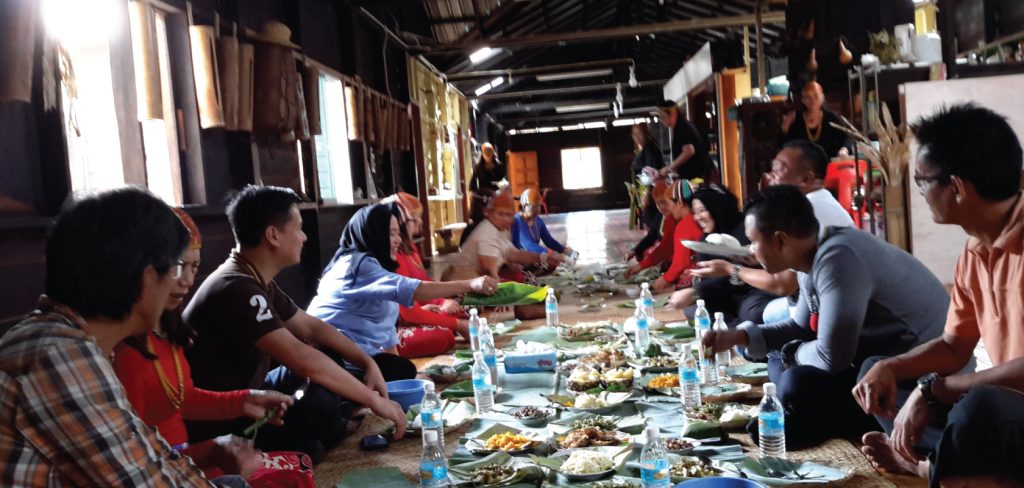
Stepping back in history in the Kelabit Highlands Borneo, the largest island in Asia and the third largest in the world, may be known for its rugged landscapes, ancient rainforests and exotic beaches, but the otherworldly island is also home to a number of indigenous people that still exist in tribal groups to this day. Collectively known as Dayaks, the different tribes each retain their own customs, culture, languages and laws. Kelabit is a highland plateau and home to the indigenous Kelabit tribe, one of the smallest tribes in Borneo. Famous for their hospitality, elongated earlobes and friendly demeanour, the Kelabit are often considered some of the friendliest people in Malaysia. Other tribes, such as the Lun Bawang, living predominantly around Ba’ Kelalan, also live in the area and together are called the “Orang Ulu” or “People of the Highlands”. Orang Ulu people were traditionally animist but converted to Christianity after the war. Many of the tribes’ ancient traditions, such as burial rituals, disappeared though some ossuaries used in funeral processes and rock carvings can be still found. The Orang Ulu women are famous for their earlobes. The long ears are a ‘jewel’ used to attract potential suitors for marriage. Today, the majority of the native people are farmers and rice produced in the area is considered some of the finest in the world with its soft texture, fine grains and splendid taste. The Kelabit speak their own tribal language, but many have learned to speak Malay and English as well making it easier for travellers to explore the region and connect with the local people. Hidden from the outside world until World War II, when Australian and British troops used the settlements as bases in their fight against the Japanese, the Kelabit Highlands are located along the border of Kalimantan, 100 kilometres southeast of Gunung Mulu and deep in the interior of the island. Here, far from the modern world, visitors can encounter an unspoilt land with a refreshing climate, jungle paths, lush paddy fields and occasional wildlife. Of course, as with any place, it’s the people that truly make it memorable and meeting with the Orang Ulu make any experience in the Kelabit Highlands even more memorable. Interested in exploring the Kelabit Highlands? Consider our three-day tour through Bario Valley to become more familiar with some of the 17 villages in the region. What to Know Before Visiting the Kelabit Highlands The best time to visit the Kelabit Highlands is between March and September. The weather is usually pleasant in Kelabit with warm and humid days, and chilly and refreshing nights The Kelabit Highlands can be reached by small propeller planes from Miri that fly into Bario or Ba’ Kelalan Bario and Ba’ Kelalan are the region’s most visited places and ideal departure points for long treks in the jungle, journeys to the countryside and longhouse visits Other noteworthy villages are Pa’ Umor (about an hour walk from Bario), the relatively untouched Pa’ Lunga with its 100 inhabitants and Ba’ Kelalan Adventurous travellers may want to conquer the peaks of Gunung Murud, Sarawak’s highest mountain with a peak of 2,423 metres
Diethelm Distinctive Borneo Coastal Day Ride
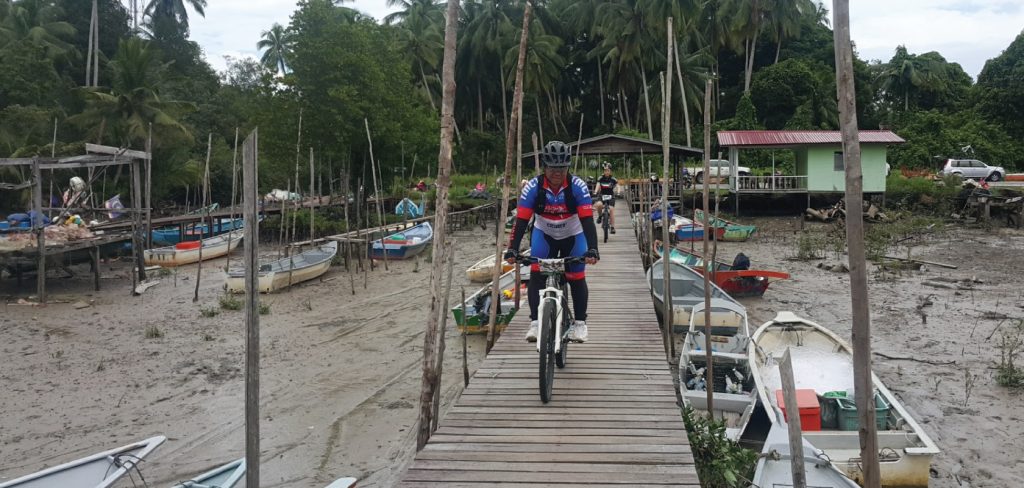
Set along Borneo’s beautiful western coastline, the Diethelm Distinctive Borneo Coastal Day Ride allows travellers to leisurely cycle on quiet roads lined with coconut trees, explore long stretches of beaches around Sempadi and even participate in local farming activities. The fully-supported cycling day tour offers unique insight into the region’s way of life and helps directly support the local community’s economy. After an early morning pickup, guests are transferred about 45 minutes to the Matang area on the outskirts of Kuching. From there, it’s onto the bicycles to start the ride following the long coastline dotted with isolated beaches and peat swamp forest. While there are a few hills at the beginning of the ride, the subsequent roads are flat with frequent wooden and steel bridges crossing crocodile-infested estuaries. At one such crossing, a daily ferry is still in service and guests will cycle directly onto the unique car ferry to pass the one of the widest crossing in Sempadi together with the local farmers and fishermen. Once on the other side, guests ride past sleepy fishing kampongs (villages) facing the South China Sea. While exploring the traditional villages, guests have the opportunity to learn about various cottage industries still alive and well in the kampongs, learn about the fishing methods used by the fishermen and watch builders constructing wooden fishing boats using traditional techniques. During low tide, guests might be able to ride on the windswept beaches for an excellent opportunity to spot a large variety of wetland and coastal birds including migratory birds temporarily residing in Borneo. From the beach, the ride continues visiting local papaya, coconut and bee farms dotted along the coastal road. With permission from the farmer, guests can participate in harvesting activities such as coconut de-husking as well as taste some of the fresh produce. The laidback ride finished in the final destination of Kampong Sempadi with a simple yet satisfying home-cooked lunch featuring seasonal fresh catches made by the local fishermen that morning. After lunch and relaxing at the kampong, guests are transferred back to their hotels in Kuching’s city centre. Benefiting the local community While the ride is certainly beautiful, a key component of this cycling tour is that all Diethelm Travel’s contacts are local. For food and drinks, we stop by well-run restaurants and food stalls that offer real authentic local tastes. During the ride, we also make the point of purchasing produce from local shops or fruit farms rather than buying from city supermarkets. This is especially popular with guests during the harvesting seasons when roadside fruit stalls overflow with tropical delicacies. In the kampongs, we hire local guides to lead the visits to the cottage industries or demonstrate traditional farming, fishing and boat making techniques. We also educate guests on how and why choosing locally produced goods and services, including souvenirs, crafts, meals and guides, from locally owned establishments directly supports the community while helping keep traditional crafts and independent business owners or artists afloat.
relocation of Diethelm Travel service desk
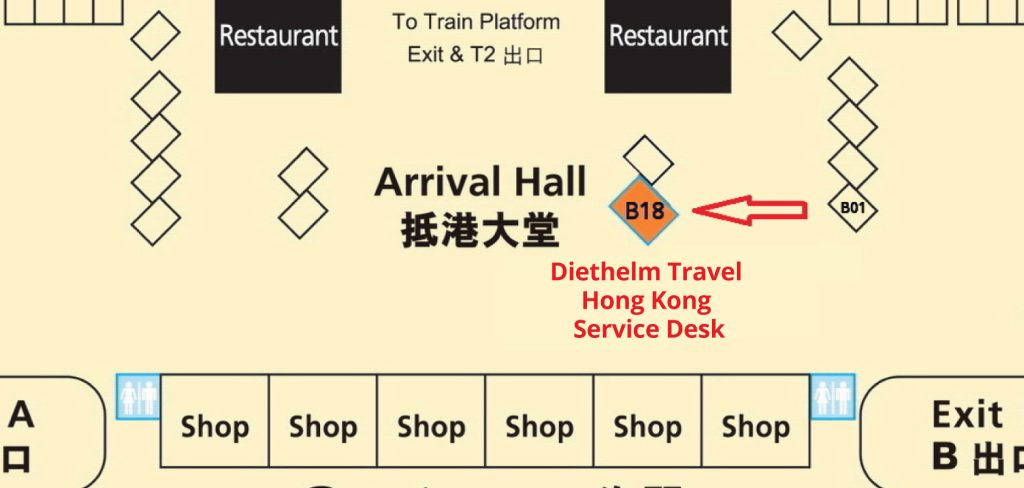
The Diethelm Travel Hong Kong Service Desk has been relocated from Booth B01 to Booth B18 in Arrival Hall B at Hong Kong International Airport. All arriving Diethelm Travel guests who have booked arrival transfers (including by private car with a driver or join-in shuttle bus services) can contact us at the new Booth B18. For any urgent matter, please contact our concierge at +852 5266 8817.