spice up your cooking repertoire with these asian dishes
Getting tired of the same recipes on rotation? You may not be able to travel through Asia right now but we can bring the flavours of Asia to you! Add some spice into your kitchen with these traditional – and tasty – recipe recommendations. Check out our picks below. [showimage url1=”https://www.diethelmtravel.com/wp-content/uploads/2020/04/Recipe_Beef-Pho.jpg”] VIETNAM Beef Pho (serves 4) Vietnamese dishes make the most of fresh herbs, pungent fish sauce and a commitment to each dish having a balance of the five flavours: spicy, sour, bitter, salty and sweet. Pho – the famous rice noodle soup topped with herbs – is by far one of the country’s staple dishes and often eaten for breakfast. For the broth: 1kg beef bones 3 litres water 1 piece ginger 2 star anise pods 2 cinnamon sticks 1 whole white onion 1 cardamom pod 2 shallots 2 teaspoons salt 2 teaspoons sugar (rock sugar is best) Directions: Add water to a large stockpot and bring to boil. Grill the beef bones in a pan (to reduce the fat) for about 4 minutes and add to stock. Grill the remaining broth ingredients for around 2 minutes and add to them to the stock. Add the salt. Softly simmer the stock for at least 1 hour, regularly skimming off any fat from the top. For the pickles: 1 cup of white vinegar 3 cloves garlic peeled 3 shallots peeled 1 red chilli 1 green chilli 1/2 teaspoon salt 1 teaspoon sugar Directions: Add vinegar to a small bowl. Chop ingredients into small, similarly sized pieces (i.e. cut the garlic clove into 4 pieces). Place all the ingredients into the vinegar, stir for 30 seconds and let sit. Optional herbal toppings: Spring onion Asian basil (commonly known in the west as Vietnamese mint) Sawtooth coriander Vietnamese celery Lime Bean sprouts Additional ingredients: One pack of thin rice noodles or vermicelli (prepared following package instructions) 300g beef filet, finely sliced and grilled To serve: Top the noodles with a few slices of beef, cover with the stock and some sliced spring onion. Add the rest of the fresh herbs and pickles to taste. [showimage url1=”https://www.diethelmtravel.com/wp-content/uploads/2020/04/Recipe_Cantonese-style-Sweet-and-Sour-Pork.jpg”] HONG KONG Cantonese-style Sweet and Sour Pork For a city that has been a crossroads of cultures since its inception, it is no wonder that Hong Kong’s kitchens fuse the flavours of different countries and regions. In the colonial period, people arrived in Hong Kong from all over China bringing their regional styles of cooking with them and later blending them together. This recipe is a classic. Ingredients: 250g pork ribs (lean pork or pork tenderloin will also do) cut into sections about 1.5 inches thick 1 egg 1/4 cup flour 1/4 cup corn starch 1 red bell pepper 1 green bell pepper 1/2 teaspoon salt A dash of Chinese cooking wine (Shaoxing wine) Sauce: 100g tomato ketchup 1 small can diced pineapple 1 teaspoon sugar Some green onions Preparing the fried ribs: Mix the chopped ribs with the egg, flour and salt in a bowl. Heat up some oil on medium heat. Fry the ribs until golden on the outside. Remove from the oil when done (at least 10 minutes), drain on kitchen towels and then set aside. Preparing the sauce and plating: Cut up the green onion into 2- to 3-inch sections. In a frying pan, heat 2 tablespoons of oil. Stir in the green onions, diced pineapple, bell peppers and continue to stir, cooking for 4-5 minutes. Add the ketchup and all of the juice from the pineapple can. Bring to a boil and add the pork. Finally, add the sugar and a dash of Chinese wine and stir thoroughly. Taste and add more sugar as needed. The dish should be very bright in colour, sweet and just a little sour in flavour. Pork should be crisp on the outside and tender on the inside. [showimage url1=”https://www.diethelmtravel.com/wp-content/uploads/2020/04/Recipe_Bak-Kut-Teh.jpg”] SINGAPORE Bak Kut Teh Situated at a historic cultural crossroads and home to centuries of Chinese, Malay, Indian and Eurasian peoples, Singapore has drawn on a nearly endless array of cultural and gastronomic influences making up unique fusion dishes that can now only be considered “Singaporean.” Some of Singapore’s most iconic local dishes, including Hainanese chicken rice, laksa (a Peranaken-inspired spicy seafood noodle soup), and bak kut teh (a hearty Teochew-inspired pork rib soup) are recognised just as highly as meals in high-end restaurants. Ingredients: 800g pork ribs 2 litres water 10g angelica root 5g Sichuan lovage rhizome 1 head garlic, peeled 1 cinnamon stick 1 star anise pod 5 cloves 2 tablespoons dark soy sauce 1 tablespoon soy sauce 2 teaspoons salt 1 teaspoon sugar 8 fresh shiitake mushrooms with stems removed and cut into bite-size pieces deep-fried tofu, blanched in hot water and cut into bite-size pieces 1 tablespoon wolfberry fruit Chilli and garlic soy sauce (mix the following together) 3 green Thai chillies 3 red Thai chillies 3 cloves garlic 3 tablespoons soy sauce Directions: In a pot, add all the ingredients except the pork ribs and bring the broth to a boil over high heat. Add the pork ribs to the pot and bring to a boil again. Lower the heat to medium and let everything simmer for 35 minutes. Turn off the heat and cover for 10 minutes. Serve hot, with rice. [showimage url1=”https://www.diethelmtravel.com/wp-content/uploads/2020/04/Crispy-morning-glory-salad.jpg”] THAILAND Spicy Thai Morning Glory Tempura (Yum Pak Boong Grop) Morning glory, also known as water spinach or pak boong in Thai, is a common green found throughout Southeast Asia often used in soups or stir-fries. This Thai-style salad showcases morning glory in a different way though…crunchy and deep-fried then drizzled with a sweet and tangy sauce! Ingredients: 100g morning glory cut into bite-size pieces For the batter 1/2 cup cake flour 1/2 cup rice flour 1/2 cup mung bean flour 2 tablespoons coconut milk 300ml icy cold water 1/2 teaspoon baking powder 1 egg yolk 1/2 teaspoon salt
what we are eating: home-cooked comfort food
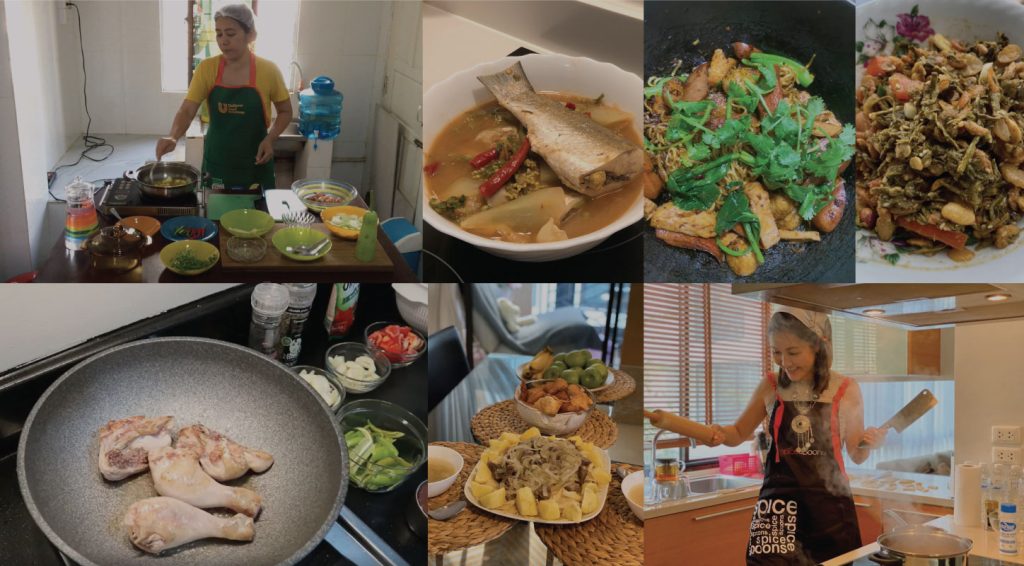
Staying home? Us too. While we can’t physically travel right now we can still experience new things and have been taking our taste buds on culinary adventures from the comfort of our own kitchens. Take a look at what we’ve been cooking to inspire your own kitchen experiments! The Diethelm chefs made these videos by themselves too. Let’s give them a big round of applause! Beshbarmak by Anara Mussina, Operations Manager Russia/CIS & Eastern Europe of Diethelm Travel Thailand The national dish among nomadic Turkic people in Central Asia. The Term Beshbarmak means “five fingers” because nomads traditionally ate this dish with their hands. Traditionally nomads used horse meat, however nowadays people adapted the dish to their own tastes and use all other types of meat. Kyat Karla Thar Chat (Chicken with bottle gourd) by Yu Yu Kyi, Account Manager VIP team of Diethelm Travel Myanmar Kyat Karla Thar Chat is a popular in Myanmar and easy to cook any time. We prepare this dish especially when we have a gathering of friends or family. It is commonly well known as Kyat Karla Thar Chat (Lad’s chicken curry) as it is a long term favourite of generations of young people who gather in late evening to cook the curry for fun just after full-moon day of November night (full-moon day of Tazaungmon according to Myanmar 🇲🇲 calendar), that day is locally known as “the thieves’ night”. Back in the old days, the carefree young men would steal chickens from a nearby home in the village and cook Kyat Karla Thar Chat curry and enjoy with their friends the whole night with beverages. Lavariya by Mohamed Inshaf, Team Leader of Diethelm Travel Sri Lanka Here we go!!! I have shown below how to make the Sri Lankan Lavariya, also known as sweet dumpling string hoppers which is made of caramelized coconut and string hoppers. Traditional Coconut Roti by Rehana Karunarathne, Team Leader of Diethelm Travel Sri Lanka You might be familiar with “Roti”, but let me show you how to cook “traditional coconut Roti”. It might become one of your new favourites!
what we’re reading: our favourite books set in asia
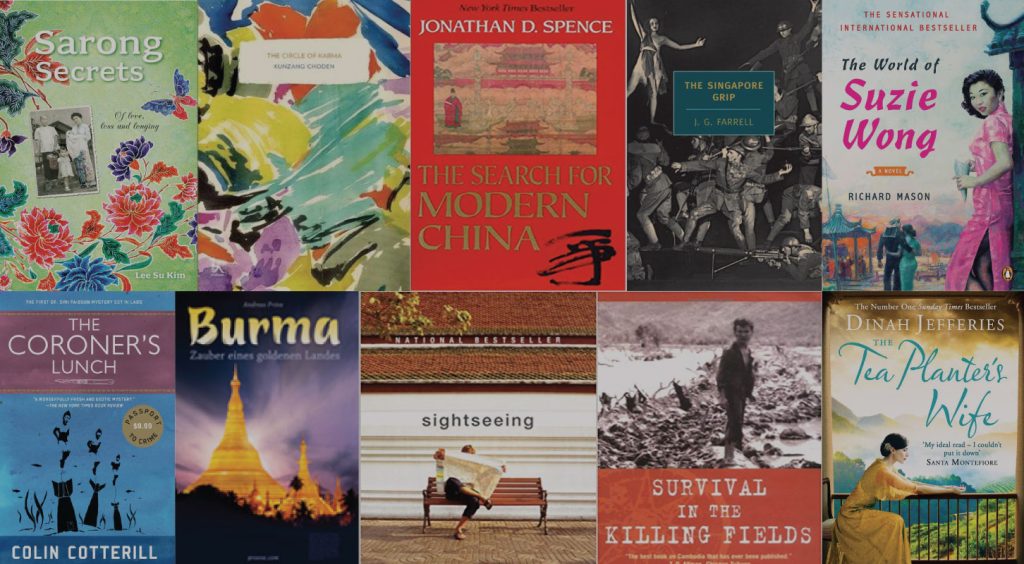
With team members across 13 countries in Asia always ready to recommend a new book, our reading list is never ending…but we like it that way! These are some of our current favourites that showcase different stories set across the continent. Survival in the Killing Fields by Haing Ngor In his memoir, Survival in the Killing Fields, a survivor of the Cambodian holocaust, Haing Ngor, shares his story of life and death under the communist Khmer Rouge. A surgeon and gynecologist by profession working in Phnom Penh, Ngor experienced firsthand his country’s fall into violence, slavery and under the ruthless Khmer Rouge surviving stints prison camps by eating insects three times before escaping. He wrote the first edition of his book in 1998 after winning the Academy Award for Best Supporting Actor in 1985 for his role in the film The Killing Fields. The second edition, published after he was found murdered in his Los Angeles home, includes an epilogue written by his co-author. The Singapore Grip by J.G. Farrell The third book in J.G. Farrell’s “Empire Trilogy” following Troubles and the Booker prize-winning Siege of Krishnapur, The Singapore Grip is a tale of love and war, a city under siege and a cultural shift set just before World War II. Following Walter Blackett, head of British Singapore’s most powerful trading companies, and his family as they experience the events leading up to Japan entering the war. In 2015, The Straits Times named The Singapore Grip as a classic Singapore novel due to its ability to weave aspects of Singapore’s history and colonial society with details of the undeniable commercial and cultural forces that shaped the way World War II played out in Southeast Asia. Sarong Secrets by Lee Su Kim Following the award-winning bestseller Kebaya Tales, the vibrant world of babas and nyonyas is back in Sarong Secrets. Su Kim’s delightful portrayal of Peranakan culture – men, women and children going about their daily lives – in Malaysia paints a picture that both Malaysians and foreigners can appreciate. Bursting with wit, humour and detail, the 12 stories found in Sarong Secrets introduce the reader to unique places, moments and experiences of a culture that is disappearing all while sharing images of the colourful sarongs, accessories and artefacts emblematic of Peranakan heritage. The Tea Planter’s Wife by Dinah Jefferies Set in 1920s Ceylon, 19-year-old Englishwoman Gwendolyn Hooper moves from London and marries a wealthy tea plantation owner only to find that life in Ceylon is more complicated than she had imagined. With two-faced neighbours, bitter plantation workers and secrets about her new husband, a widower’s, murky past coming to light, Gwendolyn must choose between her duties as a wife and instincts as a mother while navigating colonial Ceylon. A beautifully written and suspenseful tale involving a colourful cast of characters, The Tea Planter’s Wife immediately captivates readers making it no surprise that the novel is a #1 international bestseller. Secrets of the Red Lantern: Stories and Recipes from the Heart by Pauline Nguyen, Luke Nguyen (Contributor), Mark Jensen (Contributor) Going beyond just sumptuous recipes that tickle the taste buds and satisfy the stomach, Secrets of the Red Lantern shares insight into a Vietnamese family immigrating and surviving in Australia thanks to the power of good food and shared meals. Pauline Nguyen’s parents prepared the recipes found within this cookbook – perfected and passed down over many years – at their successful Vietnamese restaurant, The Red Lantern, using a surprisingly small collection of ingredients. Favourites include pho bo tai nam, a beef soup flavoured with coriander and Vietnamese basil, and thit ba roi (pork belly), presented in a way that is both enticing and accessible to the home cook. Sightseeing by Rattawut Lapcharoensap Set in contemporary Thailand, Sightseeing is a varied collection of stories from award-winning author Rattawut Lapcharoensap portraying a different side to the Land of Smiles than most visitors see. Diving deep into the country’s shifting culture and society, which seems to be tied to the past as much as it struggles toward the future, Lapcharoensap’s tales are ones of family, love, locals and foreigners, culture and conflicts all shared with exacting detail. After finishing Sightseeing, you’ll never see Thailand in the same way again. The Dr. Siri Series by Colin Cotterill The trilogy of Dr. Siri Paiboun mysteries begins with The Coroner’s Lunch. Set in Laos in the mid-1970s, Dr. Siri Paiboun is a French-trained physician and the national coroner of Laos who faces government cover-ups, nosy neighbours, Hmong shamans, romances gone wrong and more to uncover the truth when the wife of a prominent politician is found dead. Burma Zauber Eines Golden en Landes by Andreas Pröve When Andreas Pröve visited Burma for the first time more than 30 years ago, he instantly fell in love noting that it was “a pearl in a pile of gravel”. Now Pröve has once again travelled through Burma and documented his 3,000-kilometre journey – in a wheelchair no less! – complete with incredible photos. Written in German, Pröve’s account covers the water-soaked festivities of the Buddhist New Year, the country’s fortune tellers, dissidents still fighting for democracy and everything else found in the land of golden pagodas. The World of Suzie Wong by Richard Mason Set in the mid-1950s, The World of Suzie Wong is a beautifully written time capsule of a novel following the love story of Robert Lomax, a young British artist living in Hong Kong, and Suzie Wong, a Chinese woman who works as a prostitute yet becomes his muse. First published more than fifty years ago, the book has resonated with readers worldwide, inspiring a film as well as a play and ballet. The Circle of Karma (Zubaan Classics) by Kunzang Choden The first English-language novel ever written by a woman from the Himalayan nation of Bhutan, The Circle of Karma has engaged and absorbed readers from around the world since its 2005 publication. Written originally in English, it tells
what we’re watching: binge-worthy travel series on netflix

From exploring the world’s macabre tourist attractions to learning more about the state of our oceans, eating with our eyes at different street food hotspots to laughing about what it’s like to travel with your parents, these eight shows, all streaming on Netflix, are keeping our wanderlust alive even when we have to stay home. Dark Tourist Instead of beautiful beaches and city landmarks, this docuseries takes a look at the more unusual and macabre sites that aren’t on your typical tourist agenda. In each episode, journalist David Farrier explores dark tourism, travelling to experience different phenomena, such as a death-worshipping cult in Mexico, soaking up radiation in Fukushima and meeting vampires in New Orleans. Breakfast, Lunch & Dinner Korean-American chef David Chang is joined by celebrity friends in this 4-part series to discover the cuisine and culture of different cities around the world – Vancouver, Marrakech, Los Angeles and Phnom Penh – through breakfast, lunch, dinner and a lot of snacking along the way. (If you like this, also check out Chang’s other food series, “Ugly Delicious.” Our Planet Taking four years to complete and more than 600 crew members filming in 50 countries, this eight-part series showcases the world’s incredible diversity of natural habitats, flora and fauna. Produced in partnership with the World Wildlife Fund, “Our Planet” uses a combination of stunning photography and technology to share the planet with viewers narrated by the esteemed Sir David Attenborough. Street Food “Street Food” takes viewers to some of the world’s most vibrant cities, where the rich culture of street food is explored in 30 minutes. Each episode shares stories where perseverance, culture and cuisine collide in countries such as Thailand, Japan, Indonesia, South Korea and Vietnam. A Plastic Ocean Journalist Craig Leeson teams up with free diver Tanya Streeter and an international team of scientists and researchers to travel to 20 locations around the world exploring the fragile state of our oceans, uncovering alarming truths about plastic pollution and revealing possible solutions. Travels with My Father British comedian Jack Whitehall travels with his father, Michael Whitehall, in an unlikely duo in this comedic travel docuseries. Series 1 sees them embark on a classic “gap year” route through Southeast Asia, stopping in Thailand, Cambodia and Vietnam, while later series cover destinations in Eastern Europe and the United States. Carmen Sandiego This animated action-adventure series for kids is the latest reboot of North American educational character, Carmen Sandiego – a modern-day Robin Hood who dashes around the world stealing from other thieves. Restaurants on the Edge What could go wrong with owning a restaurant in some of the world’s most stunning natural settings? A lot, apparently, as this programme shows with a team of restaurant experts travelling the globe to mentor struggling restaurateurs.
what WFH looks like for us
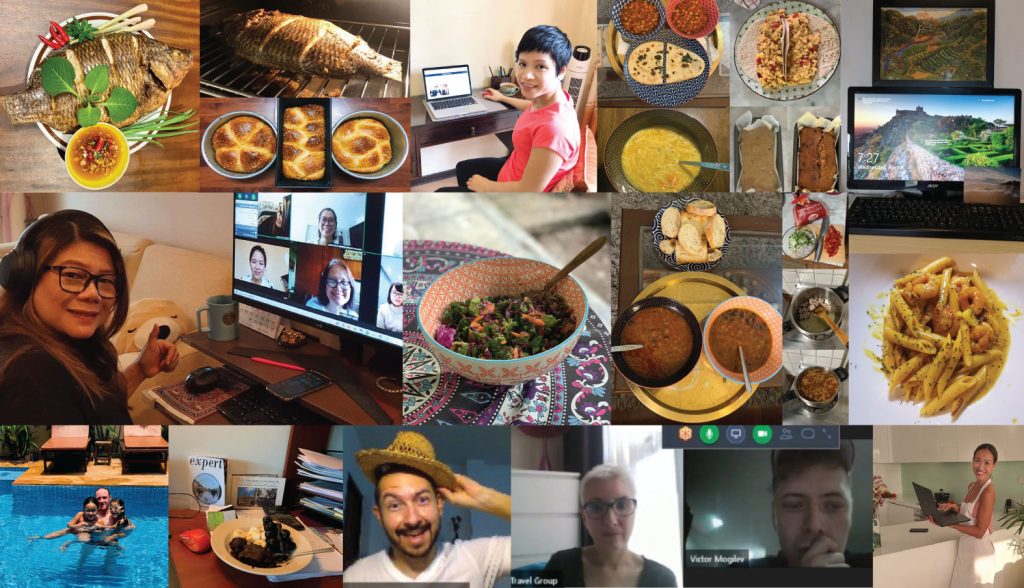
Seeing what’s happening in the world is heart-breaking. What I’ve come to realise over the past few weeks of staying in and working from home is that the connections that we used to take for granted are what matters most, such as chat breaks or lunchtime at the office pantry. Since those aren’t an option anymore, I’ve been trying to be more present and only focus on positive things while home is the only place I can be (my house floor plan is my travel route for the foreseeable future). So, I came up with a list of things that I am grateful for while working from home. Total focus – There are no noises from the neighbouring department or people walking past and interrupting. Now it’s just me in my own room with a garden view (I love greenery) and I can take my time to slowly think and work on my projects. Reduced daily costs – This includes a daily cup of coffee from a café along the way to work, breakfast, lunch and dinner, which normally cost me about USD 20-30 a day. Staying in has been good for my wallet! Old books – I had the time to dust off my bookshelf and found some books to finally finish reading. I’ve also found books that I bought but have never even opened! Now is a good time to read. Energy boost – The fact that I don’t have to wake up early to have extra time for getting ready and commuting to work in the morning is the best. I have extra time and energy to do other things I have been procrastinating doing. More ME time! – Whether during a pandemic or not, I LOVE staying home! To not have to spend time outside 8-10 hours every day is bliss. I can take longer showers in the morning, cook for myself, wear moisturising face masks while working, sing out loud when my favourite music is on…you get the idea! Also (I’m dying to add my last point for all women), it feels GREAT not having to wear a bra or makeup! I hope wherever you are that your time working from home is as enjoyable as I’m making mine. Fingers crossed and best wishes for everyone to stay safe, healthy and happy! – Wipanee Leewairoj, Group Marketing & Communications Manager [showimage url1=”https://www.diethelmtravel.com/wp-content/uploads/2020/04/Mook-Lee_WFH-02.jpg”] “We are all working together and despite the ‘social distancing,’ we are closer than ever! Since I joined the company quite recently, this intense period has helped me get to know my team faster than in normal circumstances, including each individual’s strengths, character and how they handle situations under pressure. We’re surviving – and even thriving – together. Personally, this situation has made me even more thankful for my family and appreciate how lucky I am to have them. I constantly feel a strong sense of love and care that I’m really touched by. Even if individually we all are having a difficult time, we’re also each doing our very best to support one another.” – Suphansar ‘Keng’ Siriporn, Head of Product and Contracting, Diethelm Travel Thailand [showimage url1=”https://www.diethelmtravel.com/wp-content/uploads/2020/04/Khun-Keng_WFH-02.jpg”] “After a couple of weeks working from home, I’ve had several realisations. Like many people, I now value the freedom of movement and convenience of travelling that we had prior to the outbreak (though I do appreciate not having to spend time in traffic or commuting every day!). I’m also very grateful for spending more time home with my wife, enjoying home-cooked meals together and being able to help her with household tasks while she is in her last days of pregnancy.” – Victor Mogilev, Group Director of Sales “It’s taken a little time getting used to working from home…but now I’m already thinking about the things that will be strange when life goes back to normal again like: Having to wear shoes again…I’ve been walking around barefoot for the last two weeks! Having to iron my shirts and wear long trousers again…it’s been all shorts and t-shirts for me so far Having to remember he expects me to reply “VICTOR” when Victor calls my name out at work Being able to see colleagues in person instead of over video conferencing Not having time to eat three full meals a day…I hate to admit it but I’ve probably put on a little weight” – Oscar Lopera, General Manager Group Services [showimage url1=”https://www.diethelmtravel.com/wp-content/uploads/2020/04/Oscars-cooking_WFH.jpg”] “I typically get up at 6:00 hours to do my morning workout, and am good at sticking to a routine, so working from home is no different. After a full glass of cold-pressed juice, I start my day at 8:30 hours, appreciating the refreshing scent of flowers from my balcony without any office distractions. No commute is also great – I get to wear comfy clothes and forget about crowds or crazy traffic. I can take breaks at any time and make my favourite lunch whenever I want. Of course, I do miss the social interactions with my colleagues and being inspired by seeing others working…but, for now, I’m appreciating taking some more time to recharge and spending time with my family.” – Hue Nguyen, Marketing Business Leader, Diethelm Travel Vietnam [showimage url1=”https://www.diethelmtravel.com/wp-content/uploads/2020/04/Hues-cooking_WFH-03.jpg”] “Now I have some more time for myself, my family, friends and people close to me. Also, I have more time for reading books, watching movies and for exploring different virtual tours, presentations and performances. Many museums, theatres, and performance groups have created new online content for people to still enjoy even though their physical locations are currently closed. For example, Cirque du Soleil is offering an amazing 60-minute escape that can be seen here. For me, it’s a great chance to visit different places and countries even from home! – Natalia Anosova, Sales & Account Manager – Russia/CIS & Eastern Europe “My day starts around 8:00 hours with coffee and breakfast. At 9:15 hours I set up the computer and
where to find vegan eats across Asia
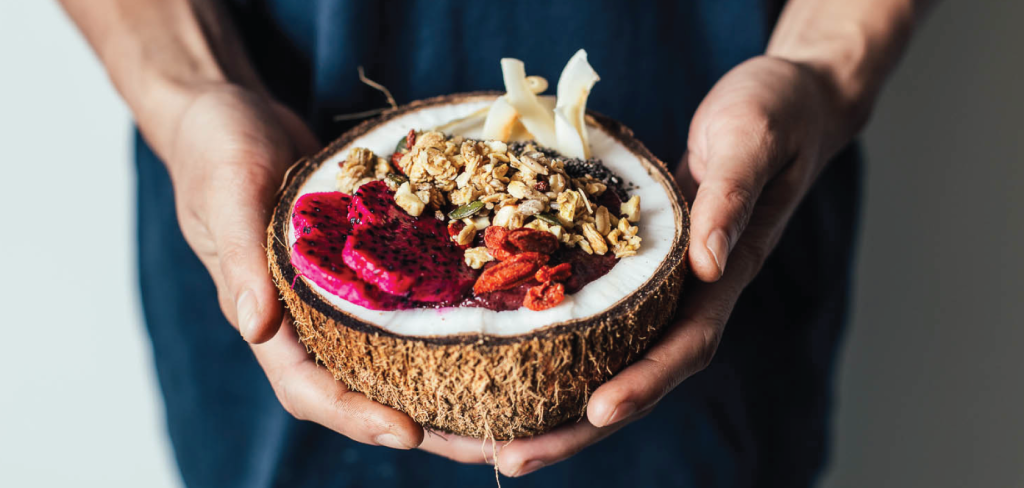
Wondering how and where to eat vegan in countries across Asia? Read on to learn about how different countries approach veganism as well as some of our local teams’ favourite vegan restaurant recommendations! BHUTAN Though most of Bhutan’s traditional food, like the national dish of ema datshi, incorporate cheese or meat, it’s not difficult to find vegan varieties thanks to vegetable-heavy dishes and fresh produce all year round. Your local guide can always point you in the right direction and recommend dishes packed with vegetables (and lots of that famous Bhutanese spice!). DIETHELM RECOMMENDS Mountain Café, Paro Mountain Café is a vegetarian haven specialising in using its homegrown fresh, organic ingredients, such as lettuce, root vegetables and herbs. Ambient Café, Thimpu Popular with Thimpu’s expats, Ambient Café is located above Norzin Lam and boasts a varied menu featuring high-quality espresso, juices and smoothies, vegan breakfasts, buckwheat waffles, sandwiches, plus homemade cakes and ice cream. [showimage url1=”https://dth.stagingurls.com/wp-content/uploads/2020/02/Mountain-Cafe-Paro.jpg” url2=”https://dth.stagingurls.com/wp-content/uploads/2020/02/Ambient-cafe-Thimpu.jpg”] CAMBODIA Siem Reap – known to some as “Temple Town” – is home to the magnificent Angkor Wat and plenty of vegetarian or vegan restaurants. As a vegan traveller, you won’t go hungry here and can easily find plenty of plant-based options in international restaurants and cafes as well as traditional restaurants. Vegetables serve as a base for many Khmer dishes so it’s often easy to request vegan preparation, especially in Siem Reap or the capital of Phnom Penh. DIETHELM RECOMMENDS ARTillery, Phnom Penh & Siem Reap This art gallery and creative cafe has branches in both Phnom Penh and Siem Reap focusing on healthy living, including hosting community art projects, food classes, wellness events and detox programmes. The plant-based menu is filled with satisfying vegetarian, vegan and raw dishes, often incorporating superfoods and organic, local ingredients. VIBE, Phnom Penh & Siem Reap With cafes in Phnom Penh and Siem Reap, VIBE focuses on good food and good vibes. Each nourishing, plant-based dish – from acai bowls to vegan burgers, tacos to tabbouleh – is created using ethically sourced ingredients with house-made toppings, dressings and more. Along with a wide range of smoothies and teas, you can also find vegan-friendly goods, like cashew cheese, to buy and take with you. [showimage url1=”https://dth.stagingurls.com/wp-content/uploads/2020/02/Vibe-Cafe-PhnomPenh-SiemReap.jpg” url2=”https://dth.stagingurls.com/wp-content/uploads/2020/02/Vibe-Cafe-PhnomPenh-SiemReap2.jpg”] HONG KONG Hong Kong is known for its incredible, varied cuisine and this extends to its vegan offerings as well. As a global city, many restaurants and hotels support the growing plant-based eating trend and you can find everything from vegan cakes to even dim sum! DIETHELM RECOMMENDS MANA! Central, Central This popular cafe specialises in healthy, organic and vegetarian Lebanese fare. Try one of the flatbread wraps spiced with zaatar, get your greens in with a fresh salad, dig into a veggie burger, and sip on one of the vitamin-packed juices or smoothies. Along with offering good-for-you food, the cafe is also committed to operating on a zero-waste policy. Miss Lee, Central Miss Lee offers an array of delicious modern Chinese dishes that are vegan, dairy-free or egg-free. Along with a la carte dishes filled with different veggies, diners can also opt for the lunch set, including the daily soup, mains, rice or noodles. The fun and friendly restaurant also has a takeaway counter where you can snag ready-to-eat options and freshly made smoothies. [showimage url1=”https://dth.stagingurls.com/wp-content/uploads/2020/02/Miss-Lee_HK.jpg” url2=”https://dth.stagingurls.com/wp-content/uploads/2020/02/Mana-cafe_HK2.jpg”] LAOS Outside the major cities of Vientiane and Luang Prabang, vegan options in Laos are a bit limited but not impossible to find. If you’re sticking to a strict vegan diet, however, it’s important to be aware of some common foods and ingredients that may work their way into otherwise vegan dishes. For example, eggs and soya milk is widely available throughout the country but the soya milk is usually from the Lactosoy brand, which often sells a version that has dairy milk in it. Then there’s the fish sauce. The Lao people have their own variety of fish sauce, called padaek, which can end up in your food if you aren’t careful. DIETHELM RECOMMENDS Khaiphaen, Luang Prabang Named after the popular crispy Lao snack made from Mekong River weed, Khaiphaen Restaurant offers vocational training to the local youth to prepare them for jobs in the region’s growing hospitality and restaurant industries. The menu showcases regional Lao dishes, both vegetarian and with meat. Tamarind Restaurant & Cooking School, Luang Prabang Overlooking the Nam Khan River, Tamarind provides a delectable introduction to the dishes and flavours of Laos. Choose from individual dishes, create your own buffet of salads or partake in a sharing platter – if you have any questions, the staff are on hand to talk you through what you are eating and how to enjoy it. Though the restaurant serves meat, many dishes can be prepared for vegetarians or vegans and the staff are well-versed in customising orders to meet dietary preferences. [showimage url1=”https://dth.stagingurls.com/wp-content/uploads/2020/02/Khaiphiean_LuangPrabang.jpg” url2=”https://dth.stagingurls.com/wp-content/uploads/2020/02/Tamarind-restaurant_LuangPrabang.jpg”] MALAYSIA Malaysia is home to many different ethnicities and national origins, which carries over into its varied cuisine. The range of delicious dishes that can be found here is incredible. Most Malaysian can ethnically be described as Malay, Indian or Chinese – all of which have strong culinary roots in vegan and vegetarian cooking – so it’s common to find a variety of vegan and vegetarian dining options. DIETHELM RECOMMENDS Simple Life Simple Life is a local vegetarian chain with a number of outlets located throughout the country. All dishes are prepared without using MSG, trans-fat, white sugar or white flour, colourings or preservatives. The casual eatery offers many 100% vegan dishes while others may come with eggs or dairy…though many of the non-vegan dishes can be prepared vegan upon request. JanXden Greenlife, George Town, Penang Open for brunch, lunch and dinner, JanXden in the centre of George Town features a wide selection of vegetarian and vegan Western and Asian dishes. You can try some local Peranakan favourites or even pesto spaghetti all at decent prices. [showimage url1=”https://dth.stagingurls.com/wp-content/uploads/2020/02/Simple-life_KL.jpg” url2=”https://dth.stagingurls.com/wp-content/uploads/2020/02/Shades-of-Green_KL.jpg”] MALDIVES Following a
sourcing vegan in Southeast Asia
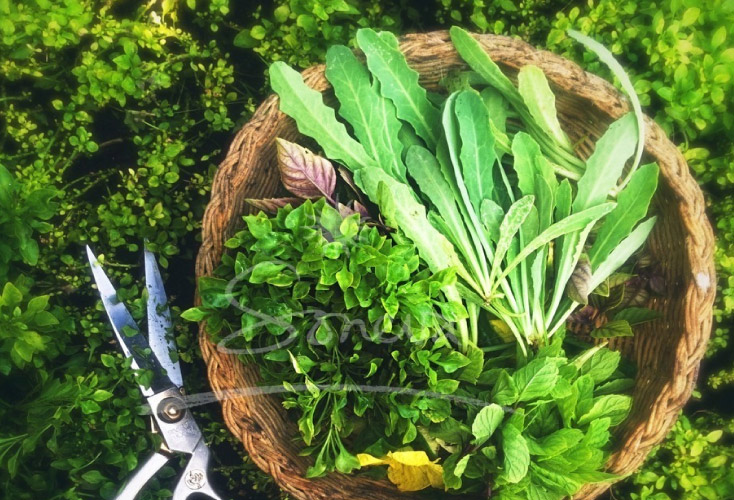
Whether you’re vegetarian, vegan or an omnivore simply searching for more plant-based dining options, Southeast Asia’s tropical climate and a plethora of fresh produce make it a particularly vegan-friendly travel destination. From breakfast to brunch, supper to late-night snacking, and every meat-free meal in-between, you can find tasty veggie dining experiences across the region. It’s easy to be Vegan! While you’ll need to be careful of some sneaky ingredients that are often used in a lot of Southeast Asian dishes, like fish sauce, it’s often easy to stick to a vegetarian or vegan diet while travelling throughout the area. Making an effort to look up nearby vegan-friendly restaurants or dining options and learning how to request vegan preparations in the local language will go a long way in ensuring dishes are prepared the way you want them. Why go Vegan? According to Google Trends, the number of people worldwide searching for information about veganism since 2014 has nearly tripled. Sticking to a plant-based diet that eschews eating meat or animal by-products is quickly becoming not just a growing food trend but long-term lifestyle often for three main reasons – protecting animals, protecting the planet and protecting your health. Why Vegan travel? Of course, our regular routines and eating habits often change while travelling due to adapting to different places, different schedules and different customs. Because of this, some may think it’s hard to continue eating vegan while travelling. In Southeast Asia, however, it’s surprisingly easy to stay on a vegan diet while still experiencing new foods and dining styles in the process! For instance, tofu and tempeh are common ingredients in Indonesian food making it simple to include plant-based proteins in your meal while in Thailand you can try the local jay Thai-Chinese eateries dishing up 100% vegan meals at deliciously low prices. Before or during your travels, do some research to find vegan-friendly restaurants, stores and even accommodation around where you’ll be travelling. The website Happy Cow is an excellent resource for finding vegan and vegetarian restaurants while there are also a ton of vegan travel bloggers and Instagrammers sharing their finds with other eaters. Happy travelling…and eating! Travelling soon and want more info on where to find vegan eats across Asia? Learn about each country’s culinary culture and find our favourite vegan and vegetarian restaurant recommendations here.
10 reasons to visit Cambodia now!

Naturally, one can’t visit Cambodia without paying respects to Angkor Wat and its surrounding temple ruins. The 900-year-old temple is the largest religious monument on Earth and a true world wonder yet the country is so much more than its most well-known site. While the Angkor ruins speak to Cambodia’s illustrious past, its present and future are just as enticing for travellers, particularly with new luxury experiences and destinations opening up. From flying by helicopter to the former Khmer capital of Koh Ker to wandering through the current country capital of Phnom Penh, zipping past ancient ruins in a vintage motorbike sidecar to lounging on tropical white sand beaches, this fascinating country offers a wealth of experiences and destinations no matter your travel style. Here’s why you need to travel to Cambodia! 1. Local charm The Cambodian people – or Khmer as they call themselves in a proud reflection to the region’s great history – gladly greet guests with genuine hospitality. With their welcoming communities, genuine care and clever sense of humour, the Khmer make excellent hosts. Outside of the growing cities of Phnom Penh, Siem Reap and Sihanoukville, the rest of the country remains refreshingly undeveloped, offering visitors an authentic look into both Cambodia’s past and current way of life. Discover the A Day in the Life experience at a traditional farming village in Siem Reap. [showimage url1=”https://dth.stagingurls.com/wp-content/uploads/2020/01/Local-charm04.jpg” url2=””] 2. Natural beauty While areas of the country are dry, other parts boast the lush jungles, well-preserved national parks, teeming wildlife and tumbling waterfalls travellers have come to expect from tropical Southeast Asia. The great Mekong River offers diverse wildlife and feeds the Tonle Sap Lake – a natural wonder – while Cambodia’s coastal area is dotted with white sand beaches and pristine islands that have all the appeal but none of the crowds you’ll find in neighbouring countries. Soak up the country’s different natural settings on a 17-Day Cambodian Luxury Vacation where you will enjoy the destination to the fullest! 3. Family friendly activities From active adventures, such as zip lining, kayaking, quad biking, bicycling and scuba diving, to cultural endeavours like hands-on art classes, the Cambodian acrobat circus, cultural villages and Buddhist pagodas, Cambodia offers a range of activities and experiences that will entertain travellers of all ages. (The sparkling swimming pools at one-of-a-kind resorts and beaches are also always a hit with families!) Spend a half-day Kayaking in One of the Largest Tonle Sap Fishing Villages and enjoy a unique perspective on this fascinating habitat. [showimage url1=”https://dth.stagingurls.com/wp-content/uploads/2020/01/Family-friendly_ws.jpg” url2=””] 4. Genuine hospitality Service at Cambodia’s resorts, hotels, travel agents and attractions consistently rank top in the world – a fact easily recognised after spending just a couple of days in the magnificent kingdom and one of the many reasons why travellers want to return to Cambodia again and again. Enjoy a Romantic Candle Lit Dinner & Sunset on a ricefield in Chhreav Village with a full catering service team! 5. Fascinating history Preserved in time while being devoured by the jungle, the ruins of Angkor are awash in an air of mystery and spirituality and still highly revered. Here, archaeological research is ongoing and new findings are still being discovered but what we know now is that the ancient Khmer Empire and Angkor capital boasted the largest settlement in the world during the 12th and 13th centuries. Today, one can still imagine its immense grandeur while wandering through the picturesque ruins. Venture through Angkor on the Classic Temple Tour by tuk tuk, electric e-bike, sedan or Jeep to explore the magnificent temples in Siem Reap! [showimage url1=”https://dth.stagingurls.com/wp-content/uploads/2020/01/fascinated-history.jpg” url2=””] 6. Varied cuisine While Khmer cuisine still reigns supreme in, throughout the country’s more-visited destinations travellers will find a variety of local and global cuisine to fit any dietary preferences. With fresh produce available throughout the year and some of the world’s finest rice, dining in Cambodia is a surprisingly satisfying and delectable experience. Taste an array of local specialities in Siem Reap during the Experience a Taste of Cambodia evening outing! 7. Sustainable initiatives Both the country’s private sector and government are investing in sustainable, eco-friendly and environmentally responsible travel initiatives in everything from hotels and resorts, to activity and transportation options. Diethelm Travel Cambodia also plays an active role in supporting sustainable travel practices and solutions and we are always carefully selecting our sustainable partners. Take part in the Rehash Trash Workshop & Sombai Liqueur Tasting in Siem Reap now! [showimage url1=”https://dth.stagingurls.com/wp-content/uploads/2020/01/sustainability.jpg” url2=””] 8. Return of wildlife Throughout the country, well-preserved national parks accommodate teeming wildlife and hide awe-inspiring, tumbling waterfalls travellers have come to expect from Southeast Asia. Nationwide parks are now better protected than ever before and wildlife associations and conservation parks are well supported. Participate in an exciting behind-the-scenes tour with the Free the Bears team in “Free the Bears” Tour in Phnom Tamao Phnom Tamao Wildlife Rescue Centre. 9. Innovative accommodations In recent years, there’s been a boom in Cambodia’s tourism industry and private investment. This has led to continuous innovation of resorts, hotels and boutique hotels offering a wide range of ways to experience the culture, as well as attractive contemporary comforts and the highest levels of services available to travellers. Stay in one-of-a-kind sanctuaries, such as Shinta Mani Wild in Kirirom National Park, 4 Rivers Floating Lodge on Koh Kong, Raffles Hotel Le Royal in Phnom Penh or Raffles Grand Hotel d’Angkor in Siem Reap, and more. 10. Excellent value for money Across Cambodia, enticing accommodation, restaurants, activities, nightlife and more all offer excellent value for money. Even more so if you dare to Go Local…which you should! Check out an Evening Market & Local BBQ Tour in Phnom Penh here. Ready to start exploring? Contact dt_cambodia@kh.diethelmtravel.com for more information on exclusive products and experiences available throughout the country.
Public Holidays 2020
JANUARY 1 January: New Years Day (Thailand, China, Hong Kong, Singapore, Malaysia, Laos, Vietnam, Cambodia, Myanmar, Philippines, Maldives, Bhutan, Sri Lanka) 2 January: On the Occasion of New Year Holiday (Maldives) 4 January: Independence Day (Myanmar) 6 January: Substitution Day for Independence Day (Myanmar) 7 January: Victory over Genocide Day (Cambodia) 10 January: Duruthu Full Moon Poya Day (Sri Lanka) 15 January: Tamil Thai Pongal Day (Sri Lanka) 23 – 29 January: Tet or Lunar New Year Holiday (Vietnam) Chinese New Year 24 January: (Cambodia) 24 – 30 January: (China) 25 January: Chinese New Year (Philippines) 25 – 26 January: (Singapore) 25 – 27 January: (Malaysia) 27 January: (Laos) 25 – 28 January: (Hong Kong) FEBRUARY 1 February: Federal Territory Day (Malaysia) 8 February: Thaipusam (Malaysia) & Navam Full Moon Poya Day (Sri Lanka) 10 February: Makha Bucha Day (Thailand) & National Day (Sri Lanka) 12 February: Union Day (Myanmar) 24 – 25 February: Losar, Iron Male Rat Year (Bhutan) 25 February: 34th Anniversary of EDSA People Power Revolution (Philippines) MARCH 2 March: Peasants’ Day (Myanmar) 8 March: Full-Moon Day of Tabaung (Myanmar) & International Women’s Day (Laos) 9 March: Medin Full Moon Poya Day (Sri Lanka) & Substitution Day for Full-Moon Day of Tabaung (Myanmar) 27 March: Armed Forces Day (Myanmar) APRIL 2 April: Hung Kings Commemoration Day (Vietnam) 4 April: Qingming Festival (Hong Kong) 4 April – 6 April: Tomb Sweeping Day (China) 6 April: Chakri Memorial Day (Thailand) 7 April: Bak Full Moon Poya Day (Sri Lanka) 9 April: Araw ng Kagitingan / Maundy Thursday (Philippines) 10 April: Good Friday (Philippines, Malaysia only in Sabah and Sarawak, Hong Kong, Singapore) & Substitution Day for Water festival (Myanmar) 11 April: Black Friday (Philippines) & Holy Saturday (Hong Kong) 12 – 14 April: Sinhala & Tamil New Year (Sri Lanka) 13 – 16 April: Water festival (Myanmar) & Khmer New Year (Cambodia) 13 April: Easter Monday (Hong Kong) 13 – 15 April: Songkran Day (Thailand) 14 – 17 April: Pi Mai Day (Laos) 17 April: Myanmar New Year Day (Myanmar) 24 April: First of Ramadan (Maldives) 30 April: Reunification Day (Vietnam) & Buddha’s Birthday (Hong Kong) MAY 1 May: Labour Day (Cambodia, Laos, Singapore, Thailand, Vietnam, Hong Kong, Malaysia, Maldives & Philippines) & May Day (Sri Lanka, Myanmar) 1 – 5 May: International Labour Day (China) 2 May: Death Anniversary of Zhabdrung & Birth Anniversary of 3rd Druk Gyalpo (Bhutan) 10 – 11 May: Nuzul Al-Quran (Malaysia) 14 May: H.M. King Norodom Sihakmoni’s Birthday (Cambodia) 24 May: Fit’r Eid Day (Maldives) 24 – 25 May: Hari Raya Puasa (Singapore) 24 – 26 May: Hari Raya Aidilfitri (Malaysia) 25 – 28 May: On the Occasion of Fit’r Eid Day (Maldives) 30 – 31 May: Harvest Festival (Malaysia) Visakha Bucha Day/ Visak Bochea Day/ Vesak Day/ Full-Moon Day of Kason 6 May: (Thailand, Myanmar, Cambodia) 7 May: (Malaysia, Vietnam) 7 – 8 May: (Sri Lanka) JUNE 1 June: Harvest Festival (Malaysia) & International Children’s day and National Planting’s Day (Laos) 1 – 2 June: Hari Gawai Holiday (Malaysia) 3 June: H.M. Queen Suthida Bajrasudhabimalalakshana’s Birthday (Thailand) 5 June: Poson Full Moon Poya Day (Sri Lanka) & Lord Buddha’s Parinirvana (Bhutan) 6 June: Agong’s Birthday (Malaysia) 12 June: Independence Day (Philippines) 25 June: Dragon Boat Festival (Hong Kong) 25 – 27 June: The Dragon Boat Festival (China) 30 June: Birth Anniversary of Guru Rimpoche (Bhutan) JULY 1 July: Hong Kong Special Administrative Region Establishment Day (Hong Kong) 4 July: Esala Full Moon Poya Day (Sri Lanka) 5 July: Boun khao Phansa (Laos) 6 July: Asarnha Bucha Day (Thailand) 19 July: Martyr’s Day (Myanmar) 20 July: Substitution Day for Martyr’s Day (Myanmar) & Lao National Women’s Day (Laos) 22 July: Sarawak Day Holiday (Malaysia only in Sarawak) 24 July: First Sermon of Lord Buddha (Bhutan) 26 July: Independence Day (Maldives) 27 -29 July: On the Occasion of Independence Day (Maldives) 28 July: H.M. King Maha Vajiralongkorn Phra Vajiraklaochaoyuhua’s Birthday (Thailand) 30 July: Hajj Day (Maldives) 31 July: Hari Raya Haji Holiday (Malaysia) & Eid-ul Al’haa (Maldives) & Hari Raya Haji (Singapore) AUGUST 1 -3 August: On the Occasion of Al’haa Eid Day (Maldives) 3 August: Nikini Full Moon Poya Day (Sri Lanka) & Full-Moon Day of Waso (Beginning of Buddhist Lent) (Myanmar) 9 – 10 August: National Day (Singapore) 12 August: H.M. Queen Sirikit The Queen’s Birthday / Mother’s Day (Thailand) 20 August: Awal Muharram Holiday (Malaysia) & Islamic New Year (Maldives) 21 August: Ninoy Aquino Day (Philippines) 31 August: National Heroes Day (Philippines) & Merdeka Day Holiday (Malaysia) SEPTEMBER 1 September: Binara Full Moon Poya Day (Sri Lanka) 2 September: National Day (Vietnam) 16 September: Malaysia Day Holiday (Malaysia) 16 – 18 September: Pchum Ben Day, Festival of the Dead (Ancestors Day Holiday) (Cambodia) 22 September: Thimphu Drubchoe (Thimphu Only) (Bhutan) 23 September: Blessed Rain Day (Bhutan) 24 September: Constitutional Day (Cambodia) 26 – 28 September: Thimphu Tshechu (Thimphu Only) (Bhutan) OCTOBER 1 October: National Day of the People’s Republic of China (Hong Kong) & Adhi-Vap Full Moon Poya Day/ Vap Full Moon Poya Day (Sri Lanka) & End of Buddhist Lent (Laos) 1 – 8 October: National Day (China) 2 October: The day following the Chinese Mid-Autumn Festival (Hong Kong) 3 October: VTE Boat Racing Festival (Laos) 13 October: H.M. King Bhimibol Adulyadej The Great Memorial Day (Thailand) 15 October: Commemoration Day of King’s Father (Cambodia) 18 October: National Day (Maldives) 26 October: Double Ninth Festival (Hong Kong) & Dassain (Bhutan) 29 October: Prophet Muhammad’s Birthday (Malaysia & Maldives) & H.M. King Norodom Sihamoni’s Coronation Day (Cambodia) 29 – 31 October: Thadingyut Festival of Lights (Myanmar) 30 October: Holy Prophet’s Birthday (Milad Un Nabi) (Sri Lanka) & Water Festival (Cambodia) 31 October: Thaluang Festival (Laos) NOVEMBER 1 November: All Saints’ Day (Philippines) & Coronation day of His Majesty the King (Bhutan) 1 – 2 November: Thadingyut Festival of Lights (Myanmar) 2 November: Saint’s Day (Philippines) 3 November: Victory Day (Maldives) 7 November:
Diethelm Cares: Animal Welfare
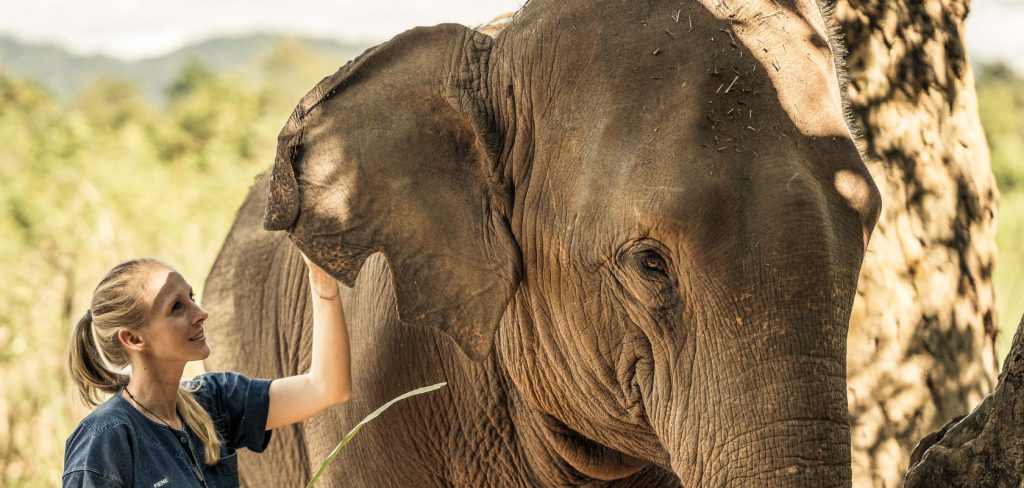
At DTH Travel, our commitment to responsible tourism extends to protecting animal welfare and promoting sustainable practices. We understand that attractions involving animals can offer meaningful social, economic, and educational benefits. However, when these activities are not carefully managed, they can negatively impact the well-being of animals and the quality of our guests’ experiences. Rethinking Elephant Tourism While riding elephants may seem like an exotic activity, it carries serious ethical concerns. The process of training elephants for rides often involves severe mistreatment, including methods like “the crush,” which subjects young elephants to confinement, starvation, and physical abuse to break their spirits. This harsh conditioning, combined with carrying heavy loads, leads to severe spinal injuries, impacting their physical and mental health. Many elephants used for rides also endure long hours in chains, deprived of proper social interaction and care. In response, DTH Travel has implemented a “Stop Sell” policy on all elephant rides and shows, instead focusing on partnerships that offer ethical alternatives. One such option is the Elephant Transit Home (ETH) in Udawalawe, a sanctuary managed by the Department of Wildlife Conservation. ETH is dedicated to rescuing, rehabilitating, and releasing orphaned baby elephants back into the wild. Visitors can witness these young elephants being fed and prepared for their return to natural habitats, contributing directly to the conservation efforts of this reputable facility. This experience is still available on our website as a responsible alternative for elephant interactions. Ethical Animal Encounters in Sri Lanka Beyond elephants, our Sri Lanka office offers a wealth of ethical wildlife experiences that allow travellers to connect with nature responsibly: Kosgoda Turtle Conservation Project: This initiative works to protect endangered sea turtles and their nesting sites along the Sri Lankan coast. By providing conservation education and collaborating with local communities, it plays a significant role in sustainable tourism. Rekawa Turtle Conservation Project: Located on the southern coast, this project protects nesting grounds for five out of seven species of sea turtles, including Green, Olive Ridley, and Hawksbill turtles. Visitors can learn about conservation efforts while witnessing the incredible sight of turtles nesting year-round. Loris Watching: Eco-lodges near the Knuckles Range and Sinharaja offer guided night tours for observing lorises, small nocturnal primates. Properties like Jetwing Vil Uyana have dedicated forest areas for lorises, providing a unique, low-impact wildlife experience. Marine Mammal Watching in Mirissa: We collaborate with ethical suppliers for whale and dolphin watching in Mirissa, ensuring excursions follow strict guidelines to minimise stress on marine animals. For a quieter alternative, we offer aerial whale watching tours. The Elephant Gathering at Minneriya: During the dry season, visitors can witness large herds of elephants congregating at Minneriya National Park. This natural spectacle offers a responsible alternative to visiting captive elephant attractions, promoting the observation of elephants in their wild habitat. Hiyare Rainforest Park and Wildlife Conservation Center: Near Galle, this centre rehabilitates local species for release back into the wild. It serves as an educational hub, teaching visitors about biodiversity conservation without direct animal interactions. Participate in Coral Restoration Programs: In areas like Hikkaduwa and Passikudah, several NGOs and eco-resorts run coral restoration projects. Visitors can get hands-on experience planting corals and learn about marine conservation efforts. We are currently exploring partnerships to activate this offering at DTH Travel Sri Lanka. Upholding Animal Welfare Standards DTH Travel is one of the first destination management companies to remove unethical animal experiences from its offerings. We have partnered with an international wildlife conservation organisation to help us audit and refine our programs, ensuring our “Animal Footprint” remains as light as possible. Our objective is to eliminate practices that harm animal welfare or threaten natural habitats. To achieve this, we: Audit Animal Attractions: We regularly evaluate all animal attractions featured in our programs to ensure they meet high welfare standards. Remove Non-Compliant Offerings: Attractions failing to meet our criteria are removed from our programs. Promote Reporting of Bad Practices: We encourage staff, customers, and travel partners to report any animal welfare concerns, enabling us to take swift action. Collaborate with Industry Partners: We work closely with suppliers and partners to uphold the highest standards in animal welfare. Together, let’s make a positive impact on wildlife and create memorable travel experiences that respect the natural world.